

In an era where digital communication and visual presentation define user engagement, a Bold Text Generator Online has become an essential tool for content creators, marketers, social media users, and everyday communicators. These tools allow anyone to instantly convert regular text into Fancy Bold Text, Bold Text for Instagram, and Stylish Bold Text that can be copied and pasted into bios, captions, comments, usernames, and messages across platforms.
Unlike traditional bold styling, which relies on CSS, HTML, or application-specific formatting, bold text generators use Unicode characters that visually resemble bold typography but are compatible with most modern apps and devices. This accessibility across platforms is a key reason for their popularity.
In this article, we explore everything from how bold text generators work to best practices, design considerations, use cases, and frequently asked questions. We also compare key features from competing studies and tools to provide the most comprehensive resource available.
What Is a Bold Text Generator Online?
A Bold Text Generator Online is a web-based bold font maker that converts ordinary text into bold style using Unicode characters instead of relying on proprietary fonts or formatting tools. The output appears as bold letters online and can be used on platforms that do not natively support bold formatting, such as Instagram bios and social media captions.
How It Works
Unicode is a standardized system for encoding text across all modern platforms. Bold text generators map standard letters to equivalent bold unicode characters — for example, “Hello” becomes “𝐇𝐞𝐥𝐥𝐨” — which visually appear bolder without changing the underlying text encoding.
This approach ensures:
- Instant generation of bold text without downloads
- Copyable and searchable text that stays readable
- Compatibility with Instagram, Facebook, Twitter (X), WhatsApp, and more
Why Bold Text Matters in Digital Content
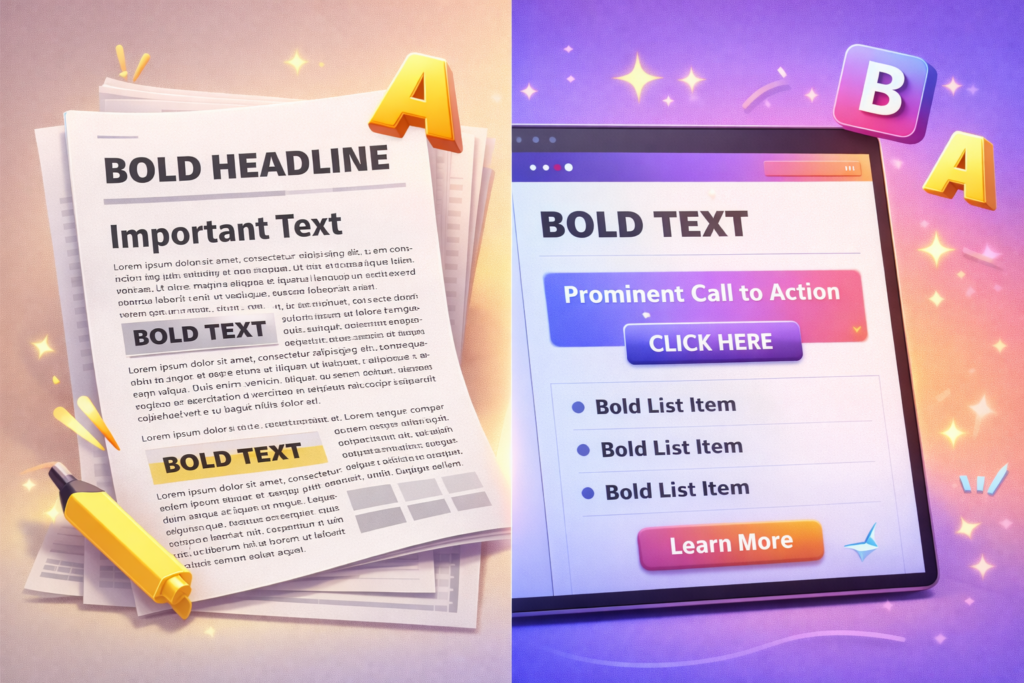
Bold text has long been used in typography and design to attract attention and emphasize important information. From print media to digital interfaces, google fonts pair finder ,the principles of hierarchy and visual weight play a significant role in readability and user experience. Research on typography suggests that changes in font weight — including boldness — can influence how quickly users read and process information. In some experimental studies, adjustments to typographical features such as font grade and weight have been shown to influence readability in certain contexts.
Bold Text in Traditional Typography
In structured writing guides, such as those from academic institutions, bold text is used to emphasize headings, important terms, and sections that require emphasis — while avoiding misuse that can confuse readers.
Bold Text in Digital Interfaces
A bold typography element on digital interfaces:
- Improves visual hierarchy
- Highlights primary messages or call-to-action (CTAs)
- Draws attention to key points in content
- Offers visual contrast against standard text
However, designers also warn against misuse — for example, faux bold (artificially thickened text) can hurt readability and should be avoided in favor of system-supported bold weights.
Core Features of Bold Text Generators
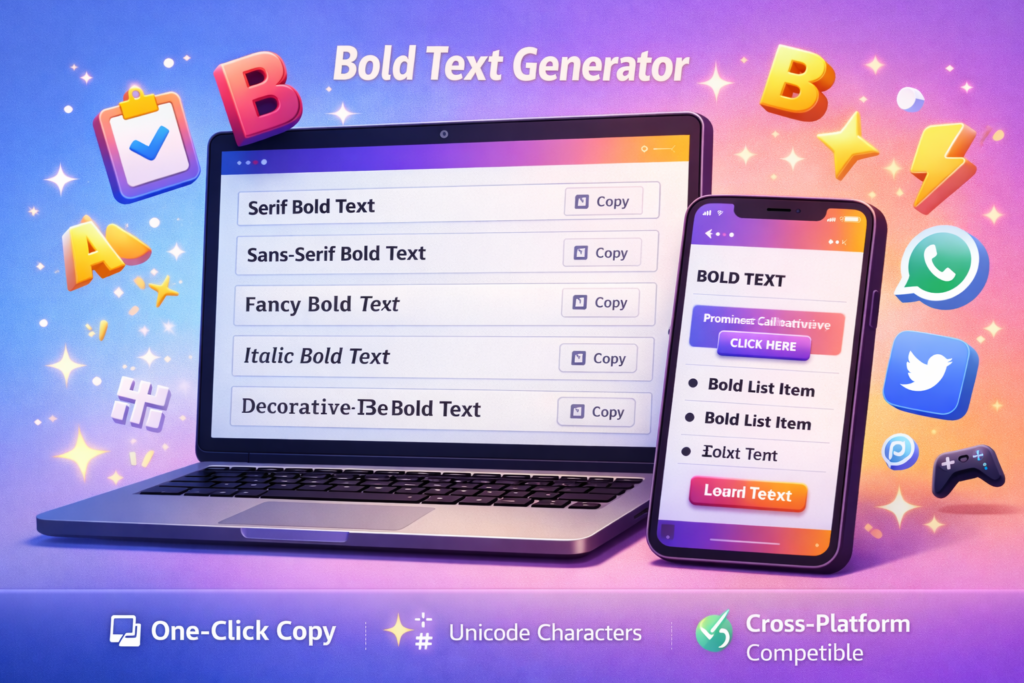
A quality bold typography tool typically offers several core features:
1. Unicode-Based Bold Letters
Bold text generators convert regular text into bold Unicode characters, allowing the output to be copied and used anywhere. This ensures the stylized text remains functional — readable and selectable — rather than a static image.
2. Multiple Output Styles
Modern tools provide variations, such as:
- Serif vs. Sans-Serif Bold
- Fancy Bold Text
- Italic Bold
- Decorative Bold Letters
These variations help users choose styles that fit different branding aesthetics.
3. One-Click Copy
Instant copy functionality is essential for usability. Users type or paste text, select a style, and copy the result — all without technical steps or account creation.
4. Compatibility
Unicode bold text works across:
- Instagram (bios, captions)
- Facebook posts & comments
- X (Twitter) tweets & profiles
- WhatsApp & Telegram chats
- Gaming platforms and usernames
Bold Text for Instagram – Practical Tips
Instagram, one of the most visual social platforms in the world, does not provide internal tools to bold text within native app formatting. Users leverage Bold Text Generator Online tools to create emphasis that stands out in bios, captions, and comments.
Where to Use Bold Text on Instagram
- Bio sections to highlight key traits
- Post captions to emphasize CTA phrases
- Highlight titles and story covers
- Comments that require visual emphasis
Best Practices
When using bold text for Instagram:
- Bold only key words or phrases, not entire sentences
- Reserve bold text for important CTAs or hooks
- Avoid overuse to maintain readability
Bold Text Copy Paste – The Core Function
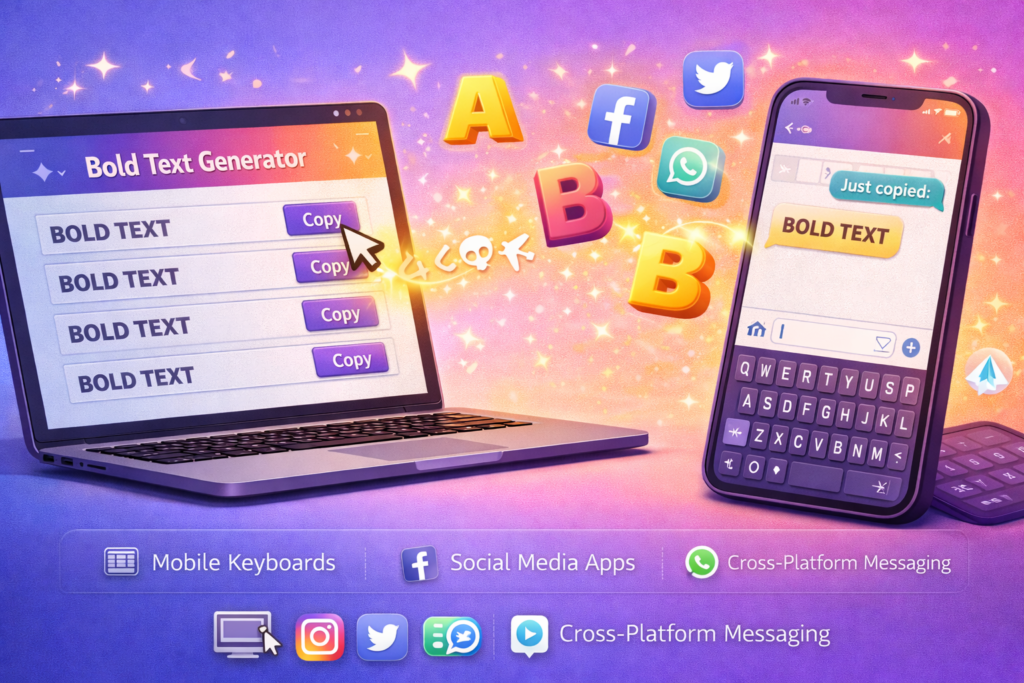
The essential benefit of a bold text tool is the ability to Copy and Paste Bold Text with ease. Once SVG converter, users can instantly paste bold text into any application that supports Unicode, making these tools versatile and efficient.
Why Unicode Matters
Unicode conversion makes the bold text adaptable to:
- mobile keyboards
- cross-platform messaging apps
- social media profiles
without requiring built-in bold formatting support.
Stylish Bold Text – Creative Expression & Branding
Stylish Bold Text goes beyond pure emphasis — it adds personality to digital content. Many bold text generators support multiple stylistic variants, including decorative and script-like styles that can convey mood and brand personality.
Creative Use Cases
- Instagram bios and stories
- Personal branding on portfolios or resumes
- Gaming usernames and hashtags
- Event and campaign slogans
Bold Typography Tool – Design & UX Considerations
From a design perspective, bold typography serves two purposes:
- Draws attention
- Guides the reader’s eye through content
However, research points out that overuse of bold text or fake bold styling can negatively impact readability. Therefore:
- Keep bold text selective
- Avoid unnecessarily heavy fonts
- Use bold only when it supports content comprehension and UX
Studies on typography show how font weight adjustments can subtly influence reading behavior and perception.
When Not to Use Bold Text
While bold text is a powerful tool, it has its limitations:
- Too much bold text can reduce clarity
- Excessive use can appear spammy
- Some screen readers interpret Unicode styles poorly, affecting accessibility
For inclusive content, default formatting word combiner with minimal bold emphasis yields the best balance.
Comparative Insight: Competing Content Themes
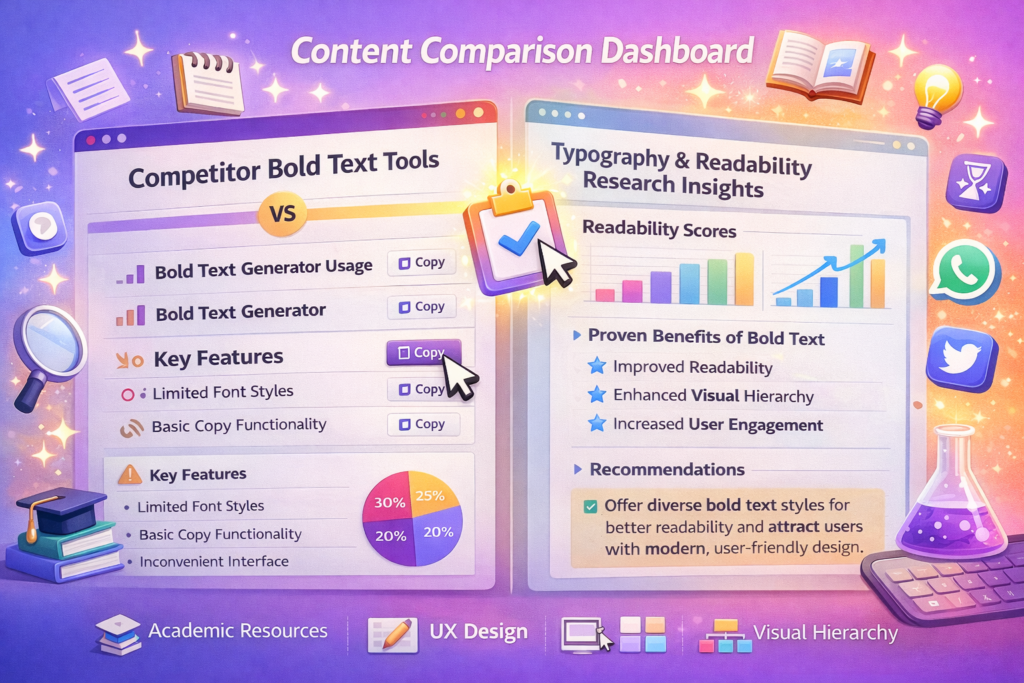
To create differentiated content against competitors, consider these insights:
Readability Research vs. Bold Generators
Competitor articles may focus narrowly on tool features. However:
- Research on bold typography explores how legibility changes when font weight changes — a topic that enhances depth and authority.
Best Practices from Writing Guides
Academic resources, like university writing style guides, reinforce proper use of bold and structured emphasis, which adds credibility when referenced.
UX Focus
Articles on typography emphasize that visual hierarchy matters for engagement — a point your article can expand with broader UX research context.
Common Bold Text Generator Types
| Style | Description |
| Bold Serif | Traditional bold with serifs |
| Bold Sans-Serif | Clean and modern bold |
| Fancy Bold | Decorative and aesthetic |
| Italic Bold | Emphasized yet stylish |
| Bold Unicode Variants | Unique character mappings |
Many online tools offer more than one style — sometimes 60+ or 150+ variations — allowing flexibility for different platforms and uses.
SEO & Marketing Benefits of Bold Text Tools
Though bold Unicode text doesn’t directly impact search engine ranking, it influences user behavior and engagement metrics:
- Increases attention in social feeds
- Improves click-through rates on calls-to-action
- Enhances visual branding consistency
- Encourages content sharing
In many digital marketing strategies, visual emphasis contributes to better user response — indirectly supporting SEO goals.
Conclusion
A Bold Text Generator Online is more than a simple utility — it’s a versatile tool for enhancing digital content, making compelling social media text, and improving visual communication. Whether you need bold text for Instagram, fancy bold text, or stylish bold letters online, understanding the nuances of Unicode typography and how to leverage these tools effectively can elevate your content in meaningful ways.
By combining practical usage insights with design and readability principles, you can use bold text strategically — creating eye-catching, user-friendly, and professional digital content.
(FAQ)
What is a Bold Text Generator Online?
A Bold Text Generator Online is a web-based tool that converts regular text into Unicode characters that appear bold. The generated text can be copied and pasted into social media platforms, messaging apps, and other digital spaces that do not support native bold formatting.
How does a Bold Font Maker work?
A bold font maker replaces standard letters with their Unicode bold equivalents. Instead of applying font styling through software or code, it outputs visually bold characters that remain readable and compatible across most devices and platforms.
Can I use bold text for Instagram bios and captions?
Yes, bold Unicode text works on Instagram bios, captions, comments, and highlights. Many users rely on bold text generators because Instagram does not offer built-in bold formatting for these areas.
Is bold text created by these tools safe to use?
Yes, bold text generators are generally safe. They do not require personal information or downloads and use standard Unicode characters. Users should ensure they use reputable websites to avoid unwanted ads or tracking.
Does bold text affect SEO rankings?
Bold Unicode text does not directly influence search engine rankings. However, it can improve user engagement, visual appeal, and clarity on social platforms, which may indirectly support traffic and branding efforts.
Will bold text display correctly on all devices?
Most modern devices, operating systems, and browsers support Unicode bold characters. However, some older devices or platforms may not display certain bold styles correctly.
Should I use bold text everywhere in my content?
No. Overusing bold text can reduce readability and overwhelm users. Best practice is to use bold text selectively for emphasis, headings, or key phrases while keeping the majority of content in standard text.